{ 0 comments }
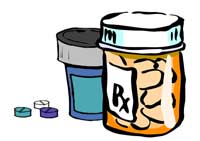
If you have prescription or over-the-counter medicine and for one reason or another, they end up unused, be careful how to dispose of them. Medicine thrown in the trash can end up in our drinking water, lakes, and rivers.
Here are some tips:
{ 0 comments }
Every day, literally, I see people who purchase dogs. The irony is that they come to our non-profit hospital to receive lower fee spay and neuter and accompanying health care and education (which they actually rarely want,) and claim they cannot possibly afford standard veterinary fees. However, they had enough money to BUY a pet (and therefore do nothing but line the pockets of breeders and puppy millers, many of whom cannot even spell the breed of puppy they sell,) and may have spent many times over the amount it would have taken to care correctly and responsibly for a wonderful pet already born and desperate for a home.
As many as 8-10 million wonderful dogs and cats are killed in our shelters every year, all for the crime of being homeless. Yet people continue to BUY pets, believing somehow that this confers status, prestige, sophistication, or that alleged “purebreds” are somehow superior to mixed breed dogs…(and, by the way, “Mixed Breed Dog” is the correct medical term for the PT Barnum fad of “Designer Dogs.”) WONDERFUL dogs, many even “purebreds,” can be adopted for a minimal fee from any shelter or rescue group in the country, usually already spayed or neutered, vaccinated, dewormed, heartworm and temperament tested, and all for a fraction of the fee these “consumers” pay to purchase one with none of that.
Some facts:
There is only one qualification anyone needs to call themselves a “breeder:”
You have access to an animal.
Period.
AKC means only as much as the ethics of the “breeder.” Many breeders have no interest whatsoever in improving a breed, they only find two reasonable breed types (Dachshund female X Dachshund male) and then they order and swear to the AKC papers that the dogs are purebred and show alleged “pedigree.” Not all breeders are unscrupulous, but responsible breeders do not ever sell to pet stores, flea markets, roadsides, through “shopper” ads or Craigslist, and they are extremely careful with puppies and the people who purchase them. We, in our non-profit hospital, do not see puppies or kittens from these types of “breeders,” and therein lies the problem. In puppy mill situations, often parents (DAM and SIRE) are chosen at random and listed on the papers. Who would know? Who would prove it? Having AKC papers can mean nothing more than showing that my own birth certificate states I am a purebred Caucasian, because my parents were. It does not mean I am healthy, intelligent, a good example of my species or breed, nor that I am even good tempered. Jeffrey Dahmer was an AKC Caucasian. And CKC papers simply means this type of puppy cannot even meet AKC standards.
Breeders that care about their pups would never EVER sell to a pet store or broker (where and how most pet stores obtain puppies,) and would do home investigations. How often does this happen? How much do “breeders” care? If they cared, they would not sell to people who 1.) know nothing about the breed, 2.) make impulse buys, 3.) ignore or are aware of the importance of heartworm prevention, sterilization, good nutrition, an appropriate vaccination protocol, and commitment to the entire life of the pet. Backyard breeders sell for money. FOR MONEY. Period.
Every veterinarian sees puppies with owners who think that because the seller gave a “shot” or “shots” (this applies to downing whiskey in small glasses, or a firearm projectile, but does not always mean “vaccination,” the actual CORRECT term,) that the pet is covered for every disease for life. Does the seller care?? Of course not; all they are interested in is convincing anyone with a body temperature to buy a puppy, often much younger in age than they tell you. And even a monkey can be trained to give an injection, but over-the-counter, feed store purchases, and “breeder” administered vaccines are often unreliable, may be inactivated, too much, too little, and can even do more harm than good to the pet, especially in small breeds. Every pet is different, and every pet deserves to have the best and correct vaccination schedule, something you rarely, if ever, see in purchased pets.
There is a lot to be said for hybrid vigor, as well. Most mixed breed dogs are more robust and have better constitutions and even conformations than the backyard breeder-puppy mill babies. Poorly or carelessly bred “purebreds” often have unfortunate genetic defects like open fontanels (permanent “soft spots,”) malaligned, missing, retained or extra teeth, deafness, unstable kneecaps, umbilical and other hernias, Demodectic (genetic type) “mange,” poor bone or muscle structure, and temperament and intelligence disturbances. NONE of these are the fault of the puppies, but the direct result of human irresponsibility and ignorant or blatant greed. While some owners believe these genetic or congenital abnormalities make their pet more charming, cute, or unique, it is not fair to the puppy and certainly ironic to see people encourage bringing more challenged pets into the world, and then see the owners fail to provide the best possible care for them, or to see wonderful homeless dogs and cats die in shelters because someone preferred to buy rather than save a life.
Please, if you care at all about animals, do some homework BEFORE adding a pet to your family. Please see your veterinarian and discuss your plans and what may be best for your family or living situation. Learn in advance what to expect and what is needed for the lifetime commitment of a pet. Spread the word, save a life; adopt a stray, rescued, or shelter animal. Help eliminate the tragedy of MILLIONS of needless deaths in shelters and on the roads each year due to too many pets for the number of people adopting them. A shelter dog of cat can love you just as much as a purchased one…and probably more, as they already know that the world is not very kind, and appreciation is something they have but your money cannot buy.
And by all means, spay and neuter, and the sooner the better.
{ 0 comments }
(ANNAPOLIS, Maryland) November 7, 2011—The holiday season is fast approaching and the CATalyst Council, a national initiative comprised of animal health and welfare organizations working on behalf of cats, is reminding cat owners that there are some things they need to be wary of during this festive time of year.
To help keep our feline friends safe and healthy this holiday season, the CATalyst Council suggests you keep the following top 10 seasonal dangers for your cat in mind:
Enjoy the holiday season with your cat and, as always, if you have questions or concerns, contact your veterinarian. They are your best resource for information about your feline friend.
{ 0 comments }
September 21, 2011
Duval County’s 4th Rabies Alert of the year is in effect through January 21, 2012 for the JULINGTON area, according to the Duval County Health Department. The Rabies Alert area is bordered on the South by JULINGTON CREEK at DUVAL /ST. JOHNS COUNTY LINE, on the North by INTERSTATE- 295 at WANDERING PINES LANE, on the West by ALADDIN RD at OLDFIELD LAKE CT., and on the East by AUTUMNBROOK TR. EAST at AUTUMN MAPLE CT.
This alert was due to the discovery of a rabid CAT in the JULINGTON area. After further investigation it was determined that there was human exposure involved in this Rabies Alert. Pet owners should maintain control of their pets at all times, and please ensure that each animal has received current rabies immunization shots from a licensed veterinarian.
Stray animals should be reported to the city’s Animal Care and Protective Services at 630-2489. For further information and to report animal bites contact Rabies Control at 253-1280.

{ 0 comments }
Recent media reports have focused on the Salmonella-related recall of a number of pet food products, and a manuscript recently published in the journal Pediatrics (Behravesh CB, Ferraro A, Deasy M, et al. Human Salmonella infections linked to contaminated dry dog and cat food, 2006-2008. Pediatrics 2010; 126: 477-483. Abstract available at http://pediatrics.aappublications.org/cgi/content/abstract/peds.2009-3273v1) reported on 79 cases of human Salmonella infection from 2006-2008 associated with contaminated dry dog and cat food – this is the first report of human illnesses linked to dry pet foods.
Below are some basic talking points to answer the questions we’ve received about this issue. More information is also available on the AVMA website at www.avma.org.
The apparent rise in pet food recalls due to Salmonella is likely due to several reasons:
These recalls are not an indication that pet foods are unsafe. Considering that the majority of these recalls have been precautionary and no illnesses have been reported, these recalls may indicate that they are preventing illness by catching the problems earlier.
Because pet foods and treats contain animal-origin products, they are at risk of contamination with Salmonella, E. coli, and other organisms. In general, these products are cooked to temperatures that will kill these organisms – however, if a contaminated additive (a flavoring, for example) is added to the food after cooking or if the food comes in contact with contaminated materials, the food will be contaminated. There are many safeguards in place to minimize the risk of contamination during the manufacturing process, but using caution when handling these foods is always recommended.
To protect themselves, their families and their pets from Salmonella infection, common sense measures are critical. These measures are particularly important if you feed your pet raw foods of animal origin (eg, raw beef, chicken or eggs), including raw treats such as raw hides and pig ear chews.
{ 0 comments }